
Base metal and strength
Define the steel grade, thickness and required mechanical properties.
Industrial supply · technical selection · documented enquiry
Cellulosic, low-hydrogen and stainless AWS-classified electrodes for pipelines, structures, equipment and industrial repair. Review products by classification, base metal and project conditions.
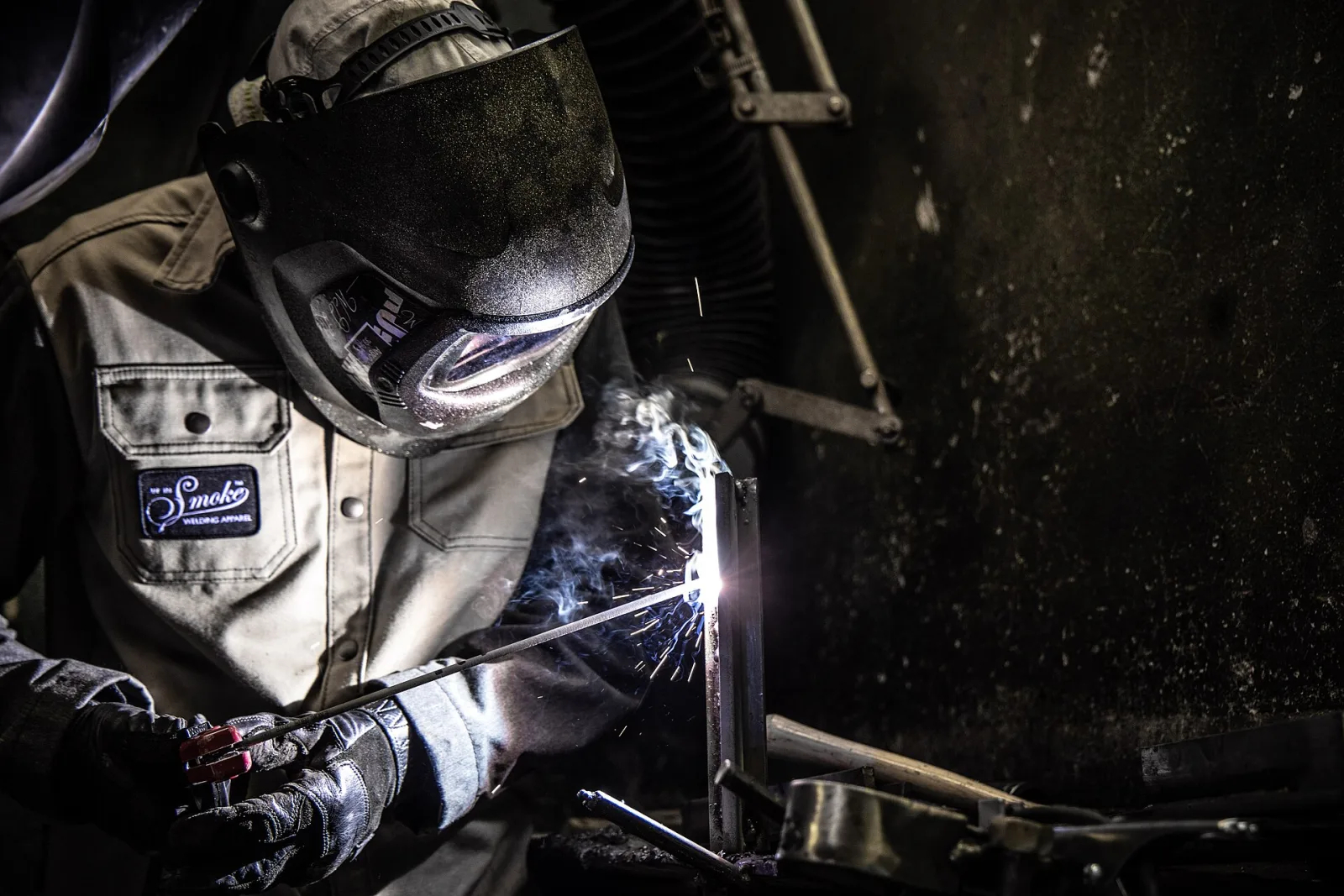
Product families
Each family is designed for different arc behavior, weld-metal properties and field conditions.
High penetration and fast freezing for root passes, pipelines and demanding field work.
Low-hydrogen families for structures, equipment and joints with defined mechanical requirements.
Austenitic grades for fabrication, repair and stainless or dissimilar-metal joints.
Technical selection before purchase
Two electrodes with similar nominal strength may differ significantly in coating, polarity, arc behavior, welding position, hydrogen control and storage. The AWS code should be reviewed together with the base metal and project WPS.
Define the steel grade, thickness and required mechanical properties.
State position, polarity, root or fill pass and equipment limitations.
Consider temperature, corrosion, impact, stress and inspection requirements.
Live catalogue
This collection is populated directly from the active product catalogue.
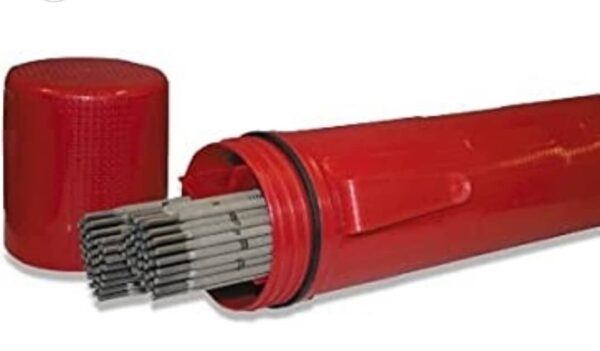
High-strength pipeline steels
Specifications and enquiry ↗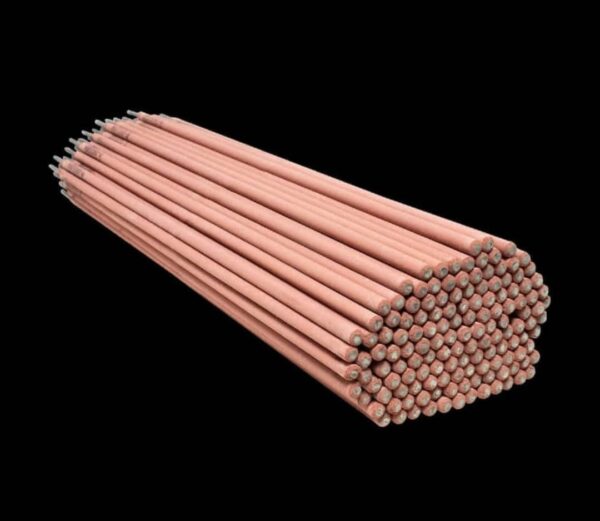
Carbon and low-alloy pipeline steels
Specifications and enquiry ↗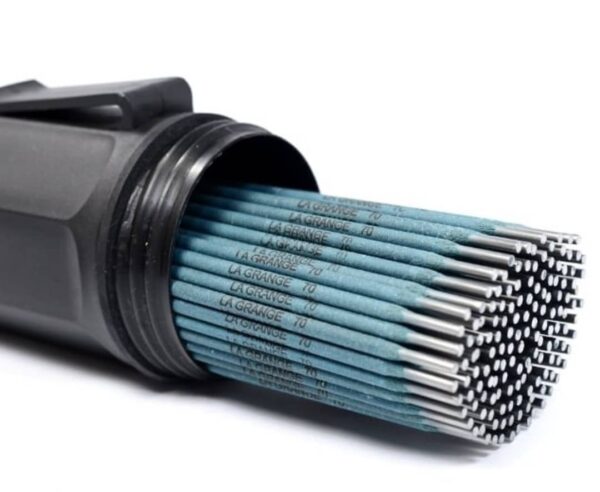
Molybdenum-alloyed low-alloy steels
Specifications and enquiry ↗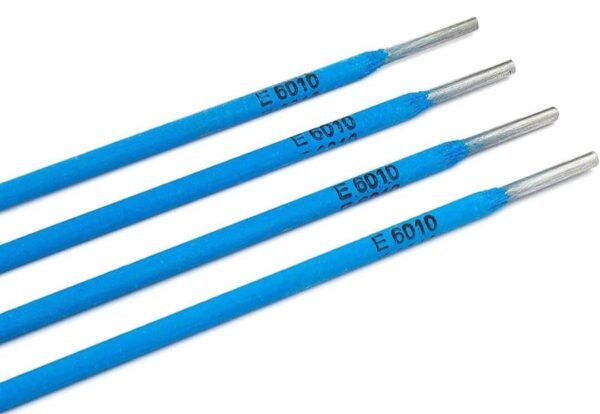
Carbon steels, particularly pipe
Specifications and enquiry ↗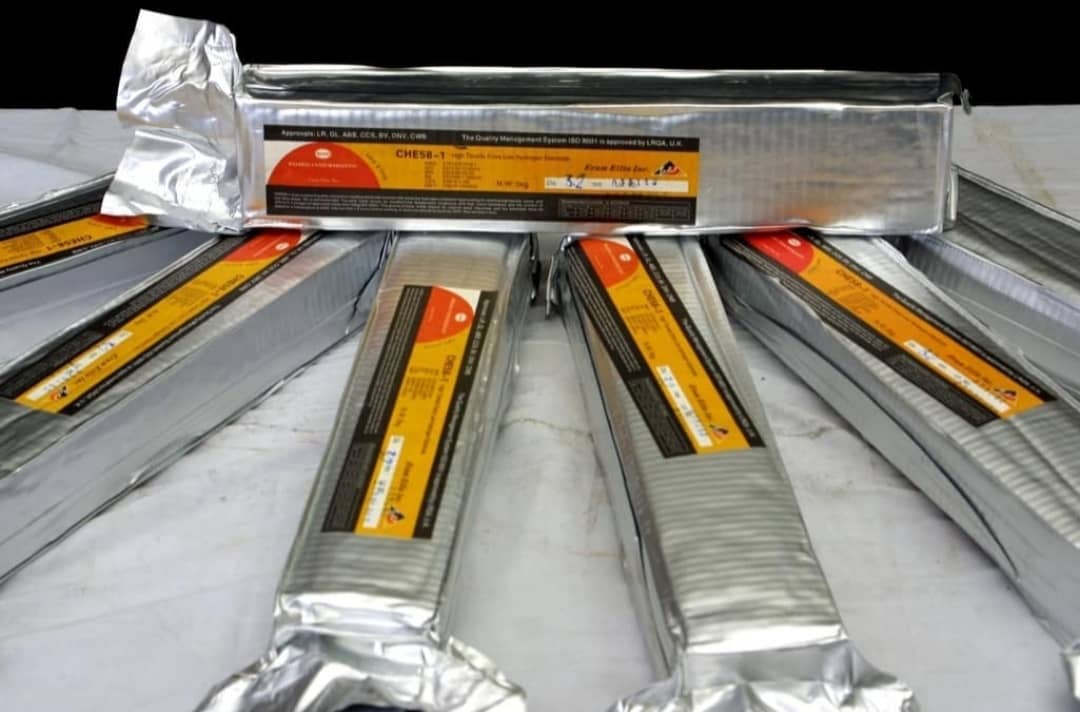
Molybdenum-alloyed, heat-resistant low-alloy steels
Specifications and enquiry ↗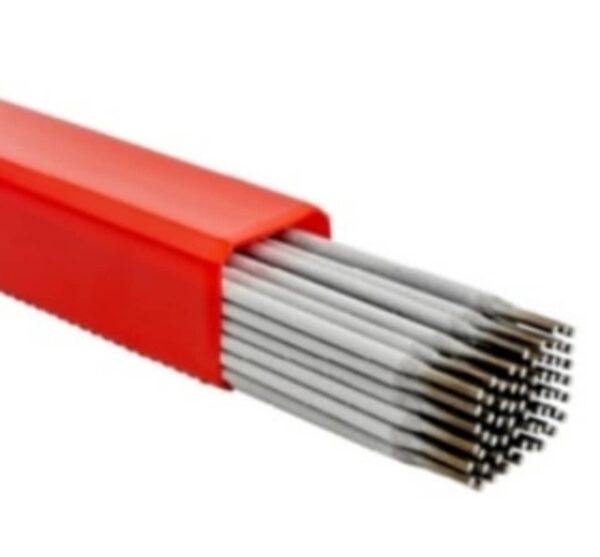
Nickel-alloyed steels for low-temperature service
Specifications and enquiry ↗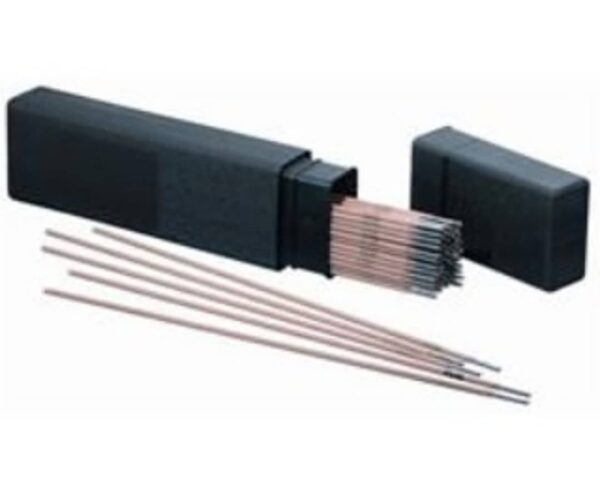
High-strength low-alloy steels
Specifications and enquiry ↗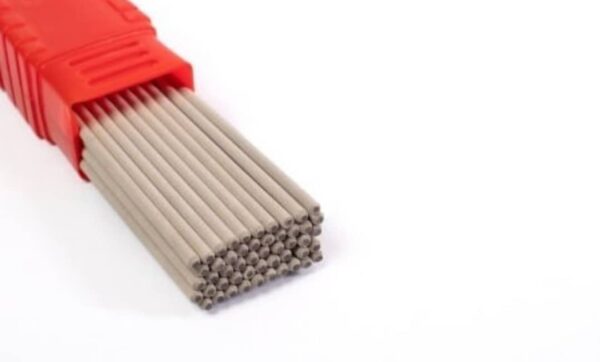
High-strength low-alloy steels with project-specific chemistry
Specifications and enquiry ↗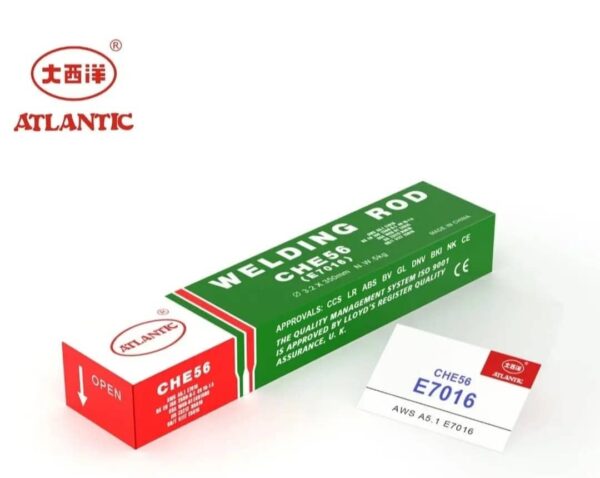
Carbon and low-alloy steels
Specifications and enquiry ↗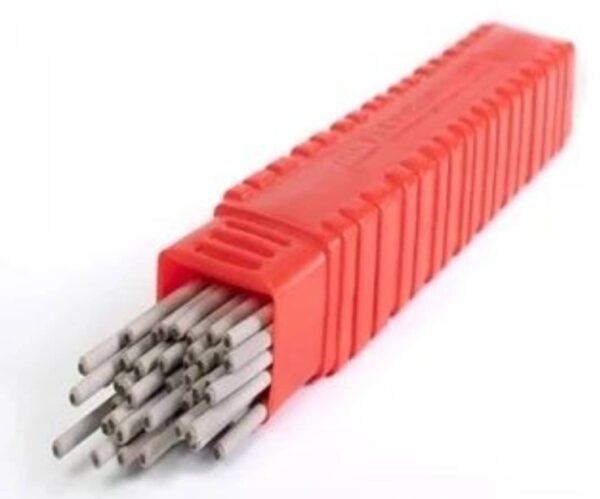
Carbon and low-alloy steels
Specifications and enquiry ↗Carbon and low-alloy steels
Specifications and enquiry ↗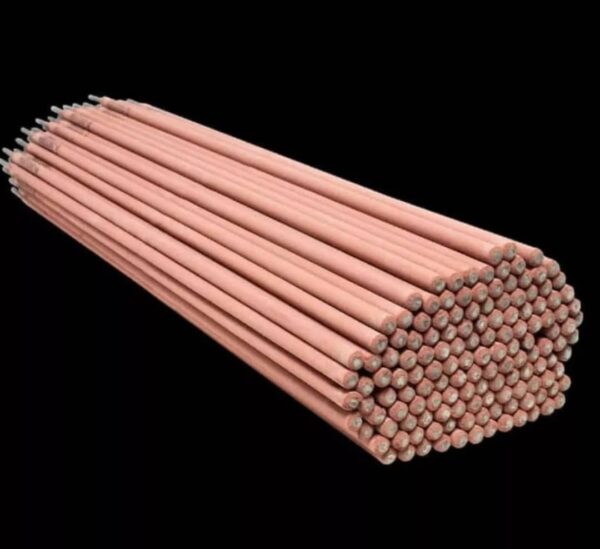
309L stainless steel and stainless-to-carbon-steel joints
Specifications and enquiry ↗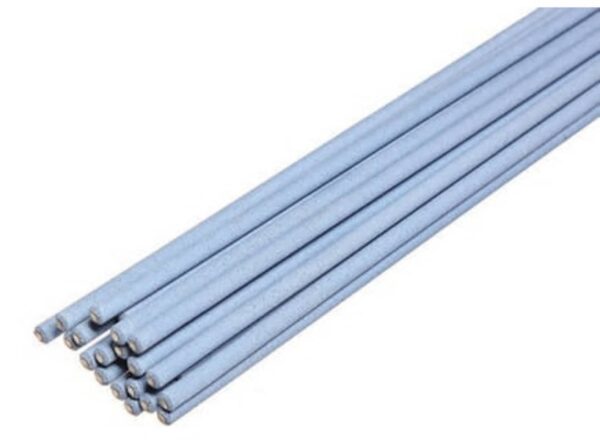
High chromium-nickel, heat-resistant austenitic stainless steels
Specifications and enquiry ↗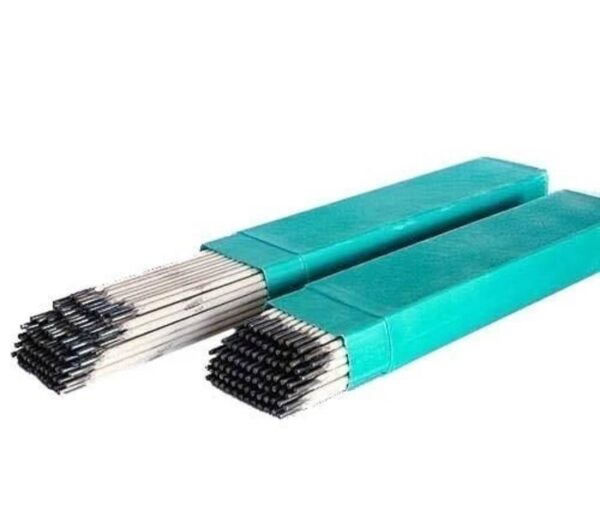
Stabilized type 347 stainless steels
Specifications and enquiry ↗316 and 316L stainless steels
Specifications and enquiry ↗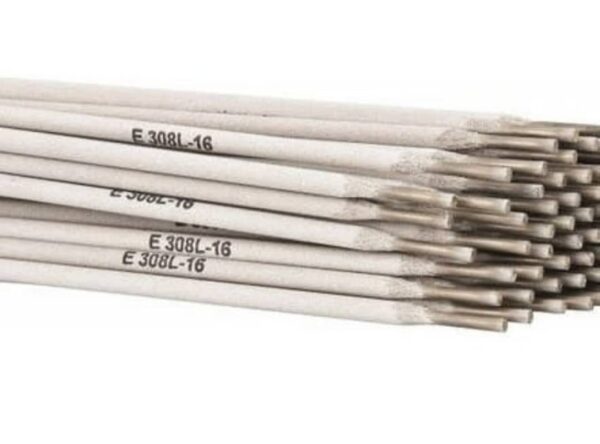
304 and 304L stainless steels
Specifications and enquiry ↗Project-based selection
For procurement, compare the full classification with the application, base metal, welding position, polarity, diameter and handling requirements. This is a starting point; final selection must follow the WPS, manufacturer data sheet and procurement specification.
| Classification | Family | Typical application | Position / polarity | Details |
|---|---|---|---|---|
| E6010 | Cellulosic | Root passes, pipelines and positional welding requiring deep penetration | All positionsDCEP | Code guide ↗ |
| E7016 | Low hydrogen | Structural and industrial joints requiring hydrogen control | All positionsAC / DCEP* | Product details ↗ |
| E7018 | Low-hydrogen iron powder | Steel structures, equipment, vessels and joints with defined mechanical properties | All positionsAC / DCEP* | Code guide ↗ |
| E308L-16 | Austenitic stainless | Joining 304 and 304L stainless steels after confirming chemistry and service | All positionsAC / DCEP* | Product details ↗ |
| E309L-16 | Stainless for dissimilar joints | Many stainless-to-carbon-steel joints and buffer layers after design review | All positionsAC / DCEP* | Product details ↗ |
| E316L-16 | Molybdenum-bearing stainless | Joining 316 and 316L where higher corrosion resistance is required | All positionsAC / DCEP* | Product details ↗ |
From project to product
The application is the starting point; the final classification is confirmed after reviewing technical and welding documentation.
Review cellulosic families for high penetration, fast freezing and positional work.
↗ 02E7016 · E7018Review low-hydrogen electrodes for joints with mechanical-property and crack-control requirements.
↗ 03E308L · E309L · E316LSelect according to base-metal chemistry, corrosion conditions and service temperature.
↗ 04Cr-Mo · Ni · Mn-MoMatch weld-metal chemistry to strength, temperature and project heat treatment.
↗A more accurate enquiry
Classification, diameter, packaging, quantity, availability and delivery location affect price and lead time. For projects with a WPS, include the technical requirements with the enquiry.
Send enquiry details ↗Read before selecting
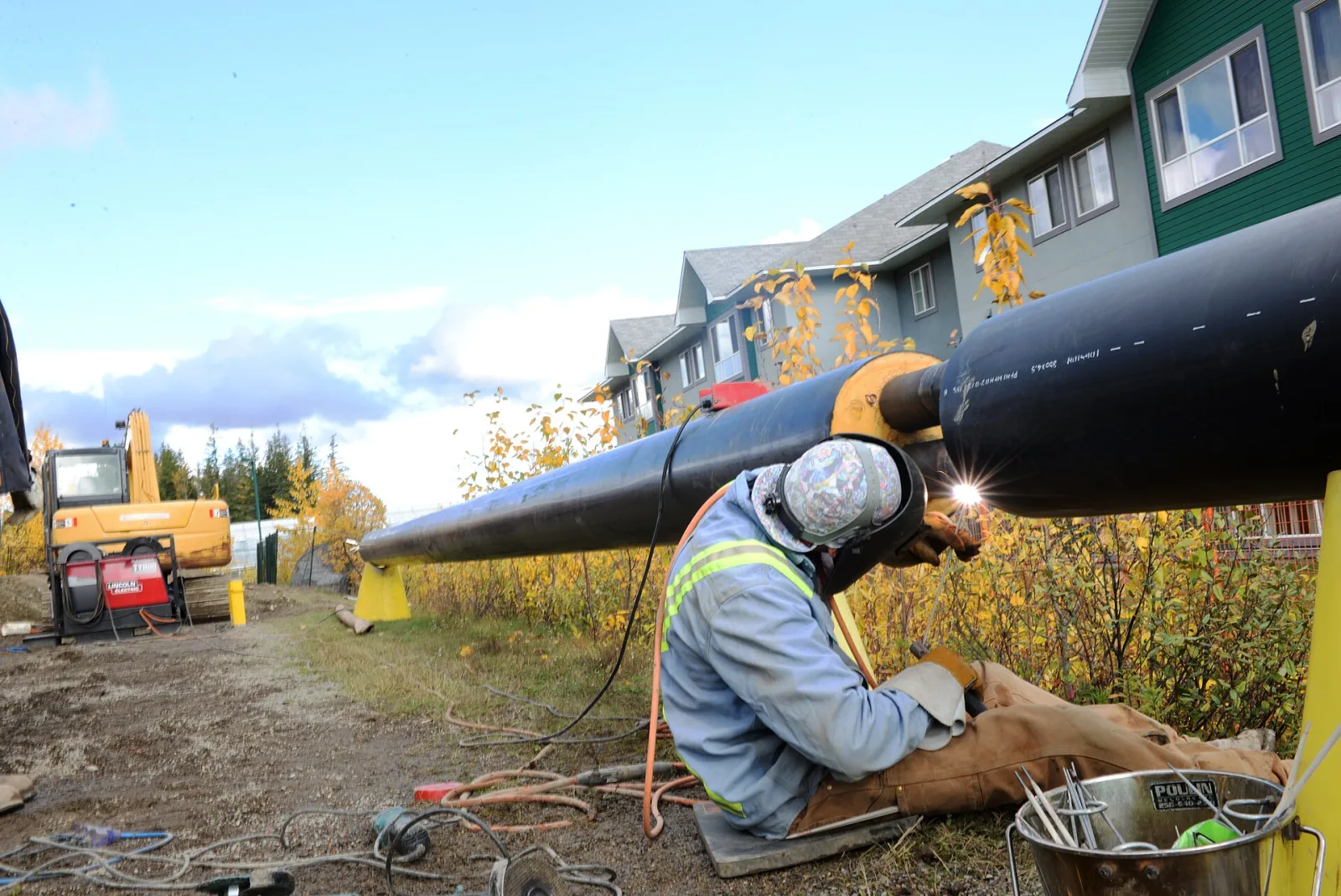
A step-by-step pipe-electrode selection guide covering base metal, WPS, 5G and 6G positions, root, fill and cap passes, and the roles of E6010, E7016 and E7018.
Read guide ↗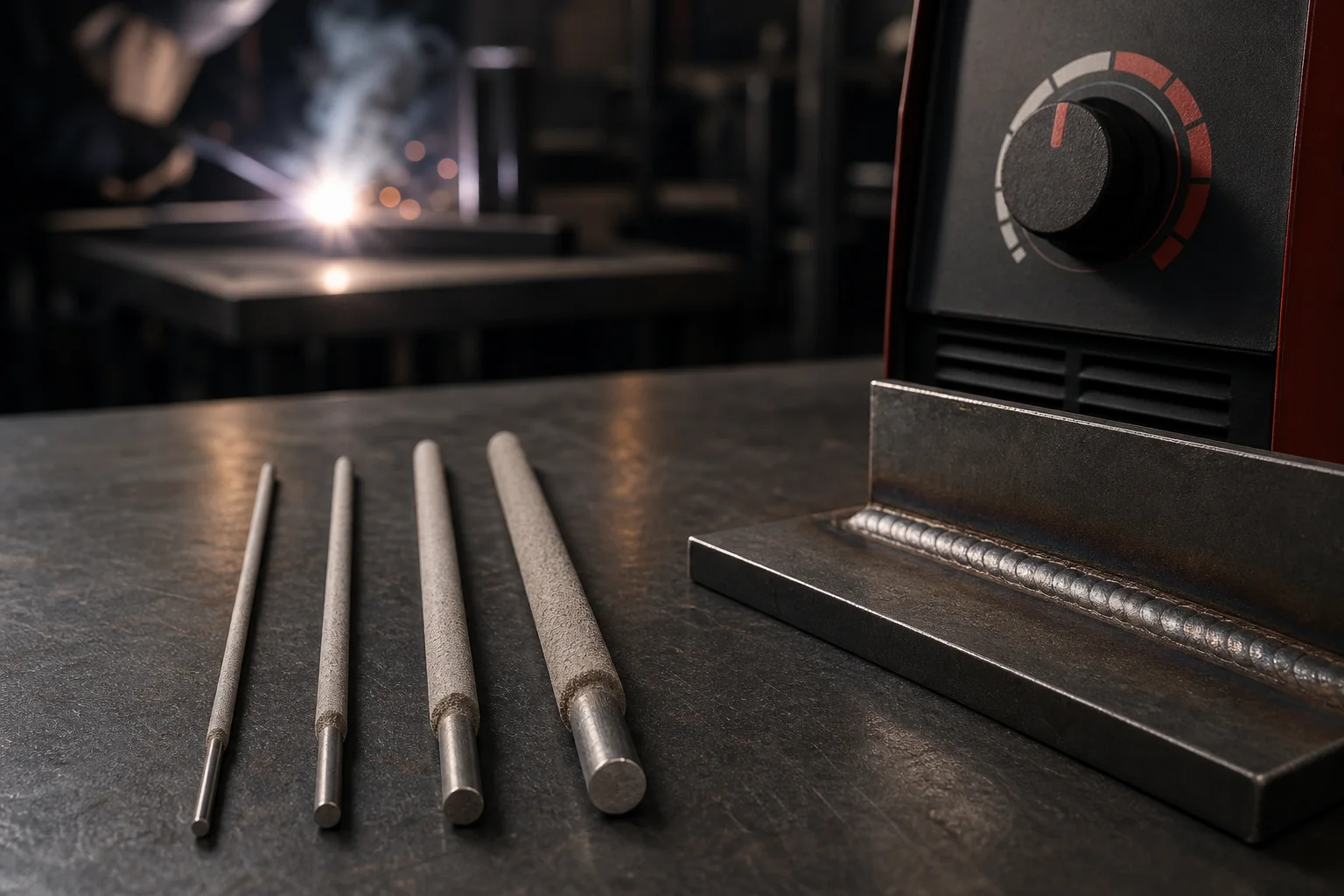
Should you use a 2.5, 3.2, 4 or 5 mm electrode? A practical guide to selecting diameter and current by thickness, electrode type, welding position and weld-pool behaviour.
Read guide ↗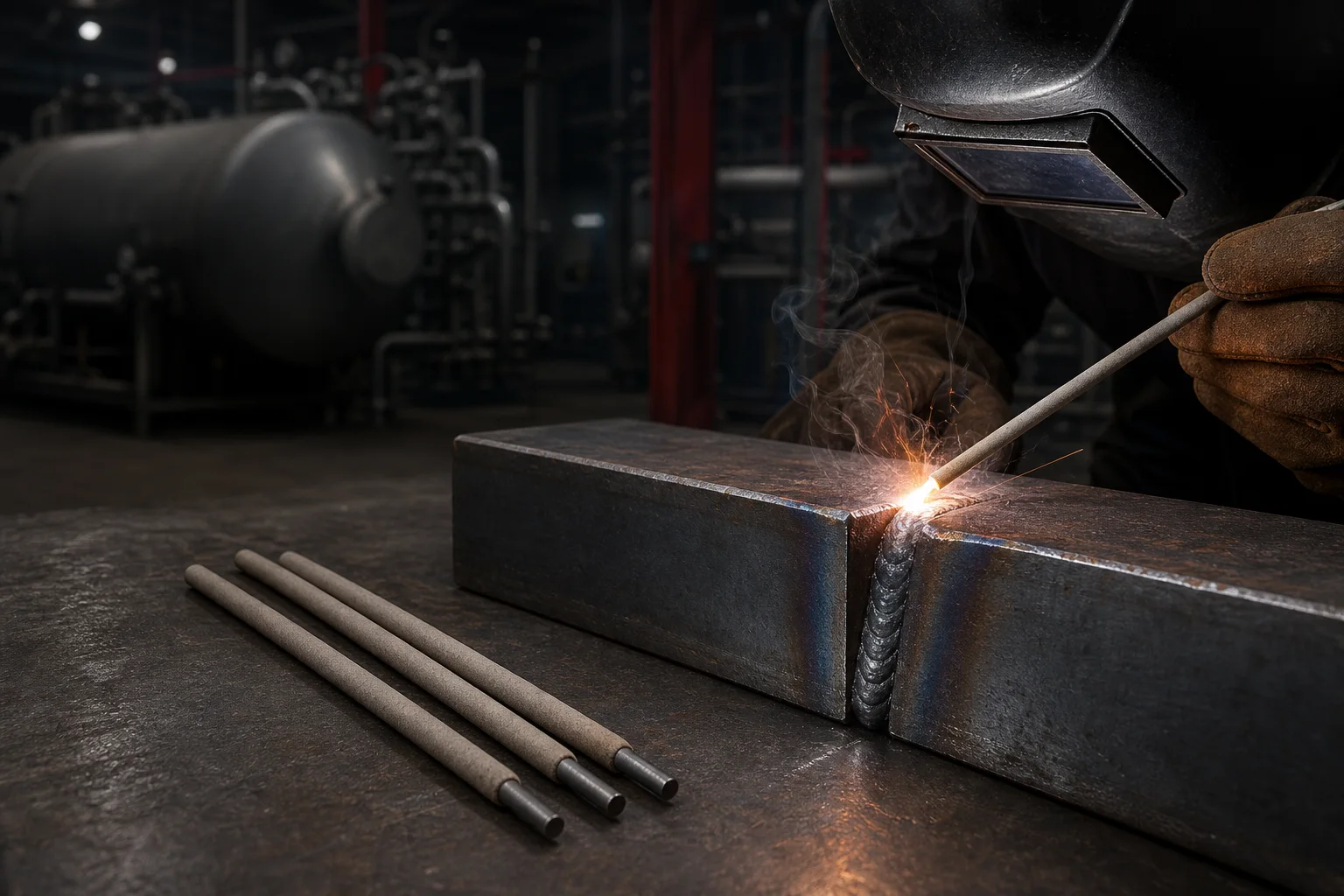
A practical comparison of low-alloy electrodes for elevated-temperature service, low-temperature toughness and high-strength joints—from base metal and PWHT to hydrogen control and WPS.
Read guide ↗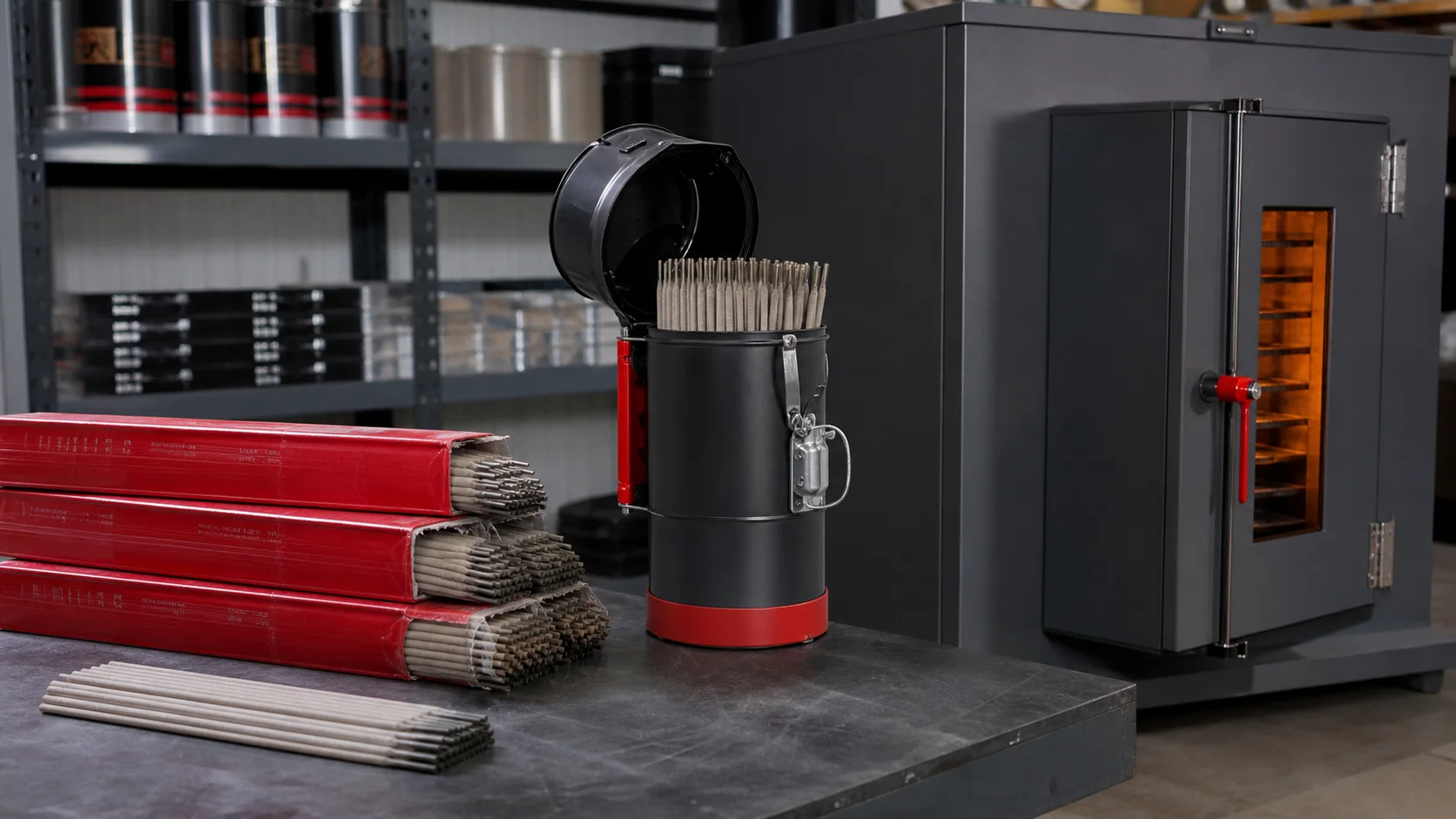
From receiving and storage to heated quivers and redrying: controlling low-hydrogen electrode moisture on site.
Read guide ↗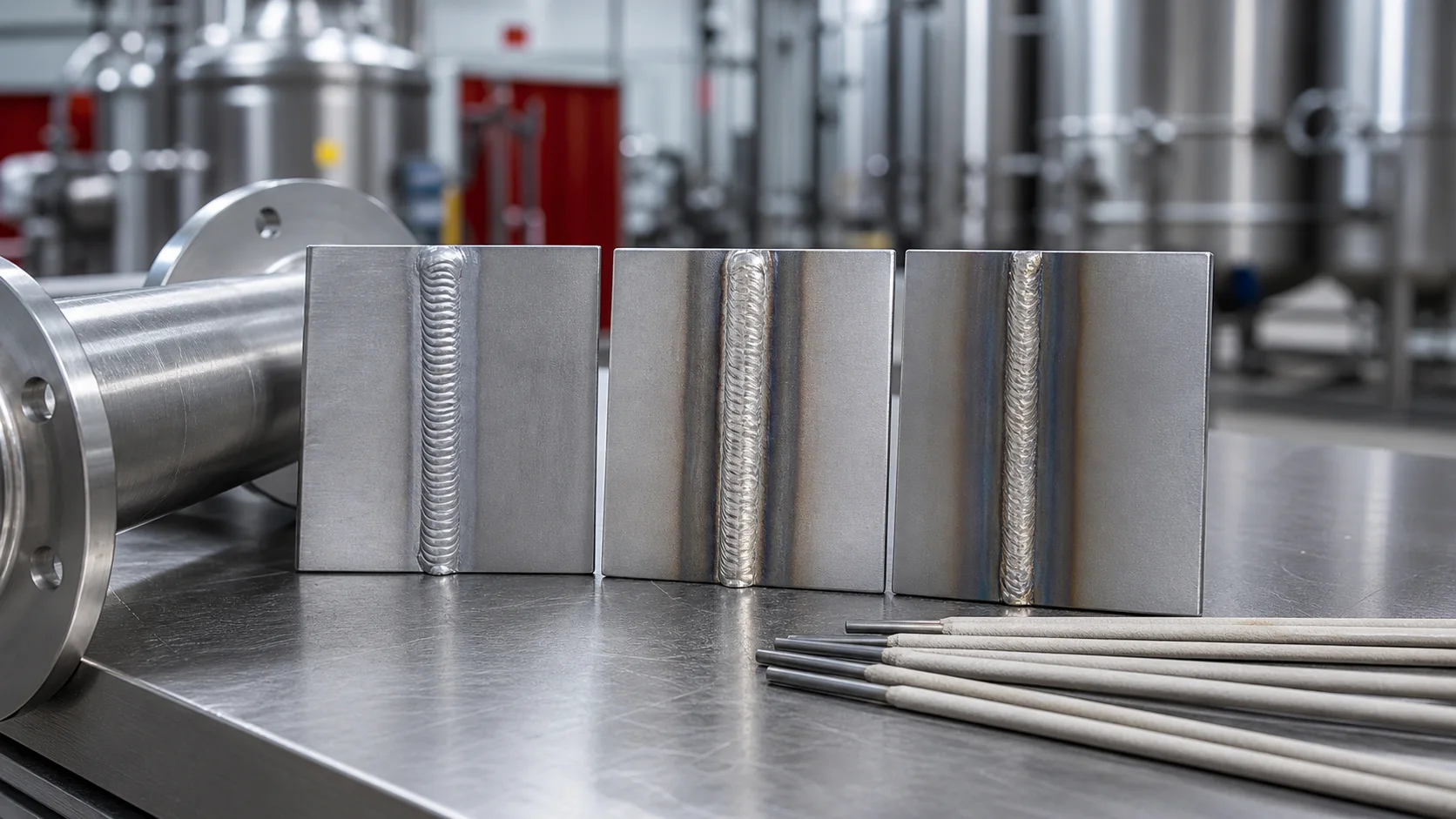
A practical guide to stainless electrode families by base metal and joint type.
Read guide ↗
Key differences in coating, polarity and use, plus what to verify before substitution.
Read guide ↗Frequently asked questions
Concise answers to common electrode purchasing and selection questions.
Download full catalogue ↗Send the full AWS classification, diameter, quantity, package type, delivery location and required date. If the classification is not final, include the base metal, welding position and project WPS.
E6010 is a high-penetration cellulosic electrode commonly considered for root passes and pipelines. E7018 is a low-hydrogen electrode used where hydrogen control and defined mechanical properties are important.
Both are low-hydrogen families, but coating characteristics, deposition behavior, operating conditions and handling requirements differ. Selection should be checked against the WPS and project specification.
Plate thickness, joint type, welding position, pass size and the available amperage range all matter. A larger diameter is not automatically better and should match the welding procedure.
They should remain dry and be handled according to the manufacturer instructions. Re-drying and holding conditions depend on the brand, procurement specification and moisture exposure.
E308L-16 is commonly considered for 304 and 304L, while E309L-16 is often evaluated for stainless-to-carbon-steel joints. Final selection depends on the base metals and service conditions.
Yes. Send the AWS classification, base metal, process, polarity, welding position and impact or temperature requirements so available options can be checked against the project specification.
No. Price and delivery depend on classification, diameter, packaging, quantity and current availability, and are confirmed after reviewing the enquiry.