There is no responsible way to choose one pipe-welding electrode without understanding the joint. A consumable suited to an open root and penetration control is not automatically the best fill or cap electrode. Pipe grade, wall thickness, diameter, 5G or 6G position, bevel design, power-source polarity, service temperature and the project WPS must be reviewed together.

Where does pipe-electrode selection begin?
The first question is not “what electrode is in stock?” Gather the joint data first:
- Base metal: exact standard and grade, wall thickness and heat-treatment condition.
- Service: design pressure and temperature, process medium, corrosion, impact and PWHT requirements.
- Joint: bevel angle, land, root opening, backing and one- or two-sided access.
- Position: rolled or fixed pipe and 1G, 2G, 5G or 6G execution.
- Welding documents: process, consumable classification, diameter, polarity, current range and technique stated in the WPS.
How each pass changes the decision
| Stage | Main purpose | Important consumable behaviour | Example sometimes found in a WPS |
|---|---|---|---|
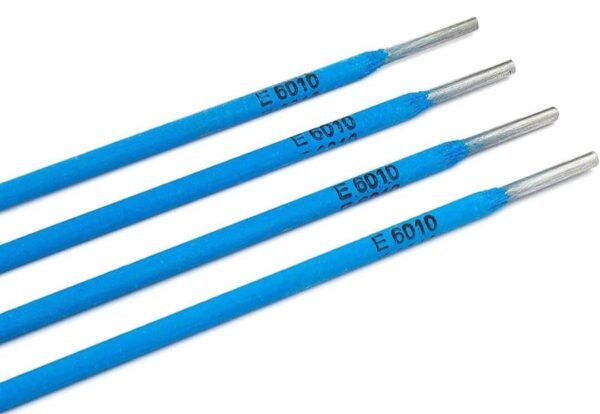
| Root | Complete edge fusion and acceptable root profile | Penetration, keyhole control, fast-freezing slag and access | E6010 in a qualified cellulosic procedure |
| Hot pass | Address root discontinuities and establish a sound fill base | Interpass fusion, heat control and compatibility with the root method | Cellulosic or low hydrogen, as qualified |
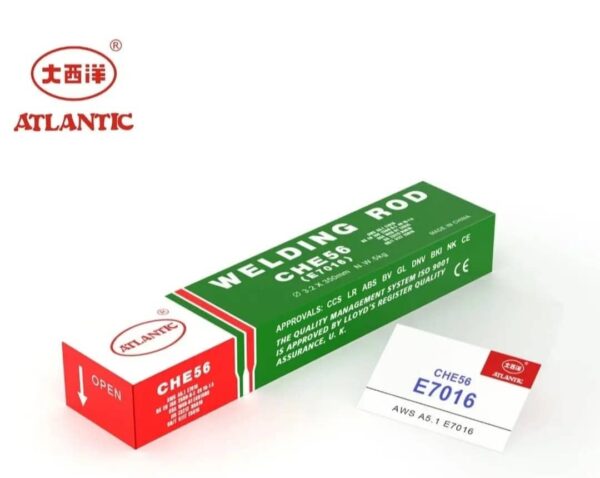
| Fill | Fill the groove with sound sidewall fusion | Deposition, hydrogen, toughness and slag control | E7016 or E7018 in a low-hydrogen procedure |
| Cap | Final profile and smooth toe fusion | Pool control, pass width and undercut avoidance | The qualified fill classification or a separately specified grade |
The table describes a decision method. A project may instead require a GTAW root or a combination of SMAW and wire processes.
When is E6010 considered for the root?
E6010 is a cellulosic electrode with a penetrating arc and fast-freezing slag. In an open-root WPS that specifies DCEP and a cellulosic technique, this behaviour helps the welder form and control the keyhole. That is why E6010 is widely associated with pipe and root-pass work.
It is not suitable for every pipe. Base steel, construction code, hydrogen restrictions, impact requirements and welder qualification may change the decision. Cellulosic electrodes must also not be baked according to E7018 instructions; their coating and storage rules are different.
E7016 and E7018 for fill and cap passes
E7016 and E7018 belong to low-hydrogen families and may be used where hydrogen control and defined mechanical properties matter. E7018 commonly provides productive filling through its coating system and iron powder. E7016 has different coating and operating behaviour, so its parameters and results cannot be copied from E7018.
For both families, sound packaging, holding ovens, atmospheric exposure limits and heated field containers are part of weld quality. See the E7018 storage and redrying guide.
What changes in 5G and 6G?
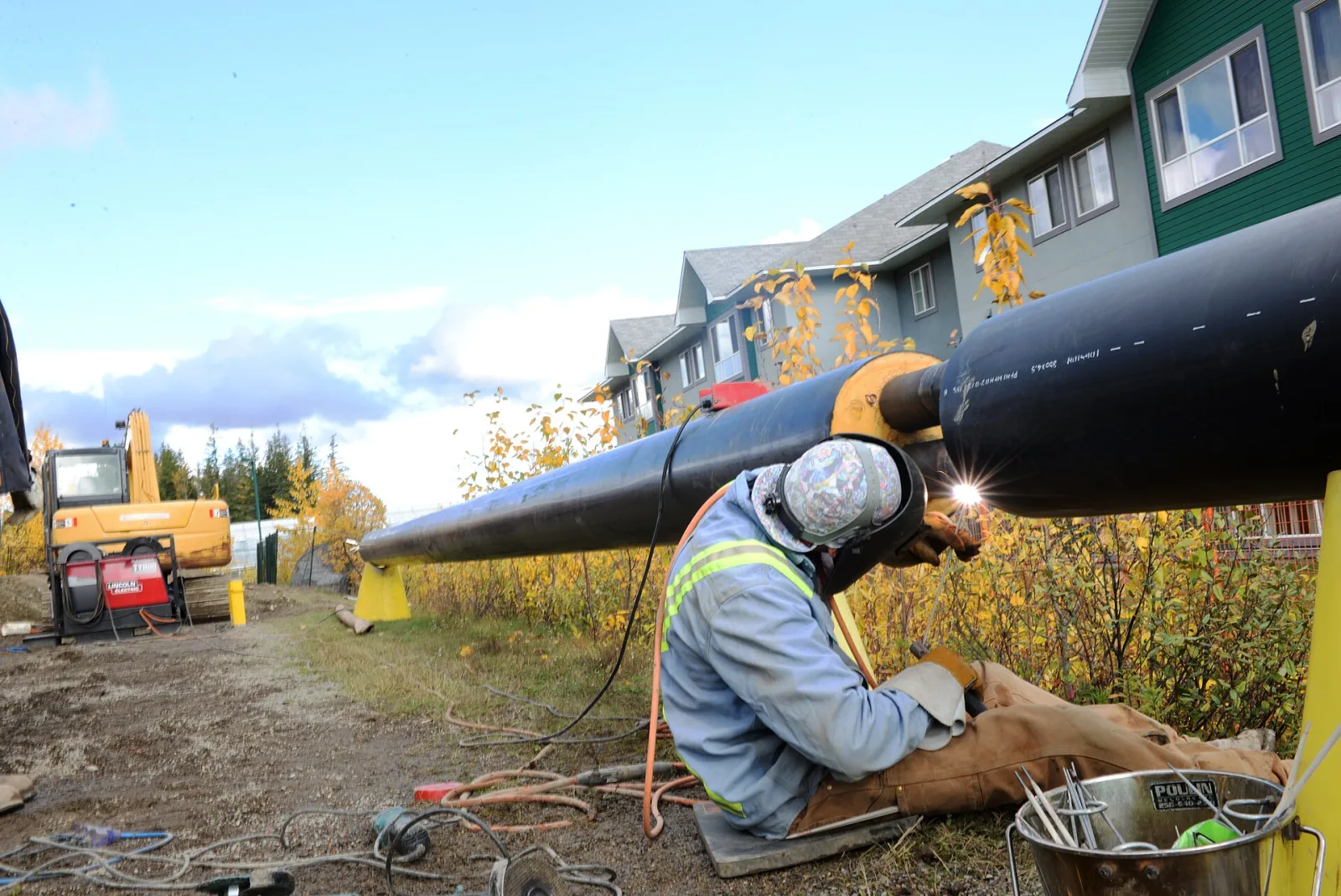
In 5G the pipe remains fixed while the welder moves through flat, vertical and overhead regions. In 6G the pipe axis is inclined, making access and pool control more difficult. One current setting is not automatically ideal around the entire circumference. Electrode diameter, manipulation, work angle and pass sequence must remain within the qualified WPS and welder-performance range.
See the electrode diameter and amperage guide for the interaction between current and pool control. Final settings must come from the specific product datasheet and WPS.
Three common situations, three different decisions
Open-root carbon-steel pipe
If the WPS permits a cellulosic method, E6010 may be specified for the root and sometimes the hot pass. Continuing the cellulosic sequence or changing to low-hydrogen fill is permitted only when recorded in the WPS/PQR.
Thick, restrained or crack-sensitive joints
Hydrogen control, preheat, interpass temperature and inspection timing may matter more than speed. E7016 or E7018 is only one part of the cracking-control plan; a suitable electrode cannot correct unidentified steel, inadequate preheat or moisture exposure.
Stainless or dissimilar pipe
E6010 and E7018 are not general stainless-pipe choices. For 304/304L, 316/316L or stainless-to-carbon-steel joints, classifications such as E308L-16, E316L-16 or E309L-16 must be assessed against dilution, medium and service temperature. Start with the stainless-electrode guide.
Costly mistakes to avoid
- Selecting on nominal strength alone while ignoring coating, polarity and toughness.
- Replacing E6010 with E7018 without WPS review and qualification.
- Using one large diameter for every pass even when root access or overhead control is poor.
- Leaving slag or visible discontinuities before the next pass.
- Mixing batches or consuming low-hydrogen electrodes beyond the permitted exposure time.
- Trusting the machine display without checking leads, work return, voltage drop and actual polarity.
Pipe-electrode enquiry checklist
- Provide the pipe standard, grade, outside diameter and wall thickness.
- State the WPS number and complete AWS/EN consumable classification.
- Identify the pass, welding position, process, diameter and polarity.
- Add impact, hydrogen, preheat, PWHT and test-temperature requirements.
- Define package type, quantity, delivery point and site consumption plan.
- Where required, match the product certificate and datasheet before purchase approval.
Read the E6010, E7016 and E7018 comparison for coating and operating differences. The E6010 guide and E7018 guide connect technical selection to available products and enquiry.
Frequently asked questions
Which electrode is best for gas pipe?
“Gas pipe” is not enough information. Pipe grade, code, pressure, thickness, position, WPS and welder qualification control selection. E6010 may be used for roots in some carbon-steel procedures, but project documents decide.
Can every pipe pass be welded with E7018?
Only when the joint design, root access and qualified WPS cover that method. E7018 does not reproduce the root behaviour of E6010 and is not an automatic substitute.
Is a larger electrode better for thick pipe?
Not always. Root and difficult-position passes often need a smaller diameter for access and pool control, while fill passes may allow larger sizes. The WPS and datasheet define the actual range.
Conclusion
Pipe-electrode selection is not one decision for the whole joint. Each pass has a different purpose. Begin with the base metal and WPS, separate root requirements from fill and cap, match diameter and polarity to position, and treat moisture control as part of the process. E6010, E7016 and E7018 work when they are used in the right place under a qualified procedure.
References and image credit: Classification decisions should use the current AWS A5.1/A5.5 edition, the governing construction code, WPS/PQR and manufacturer data. The article photograph is by Newfoundlandguy / Wikimedia Commons, licensed CC BY-SA 4.0; this web copy was resized and compressed.