E7018, E7018-1 and E7018-A1 are not three names for an interchangeable electrode. The -1 suffix concerns additional low-temperature impact requirements; A1 identifies a molybdenum-alloy weld-metal classification. Neither suffix is an automatic permission to substitute.
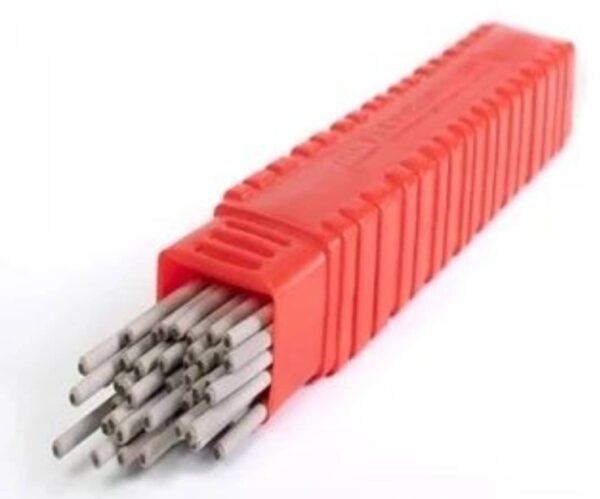
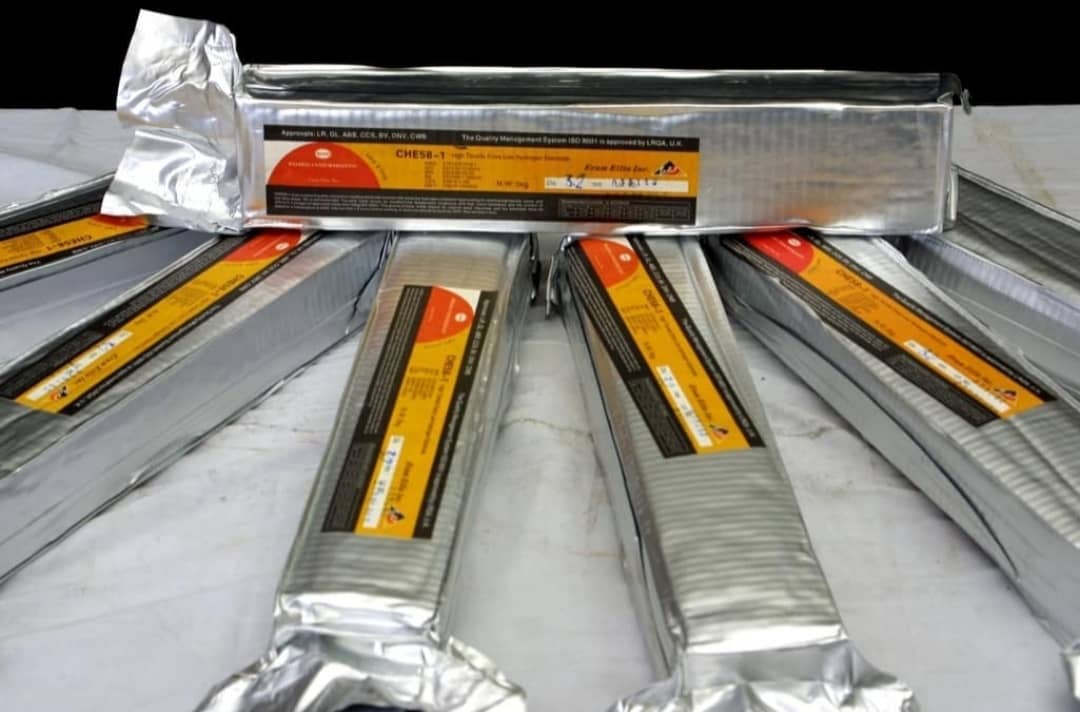
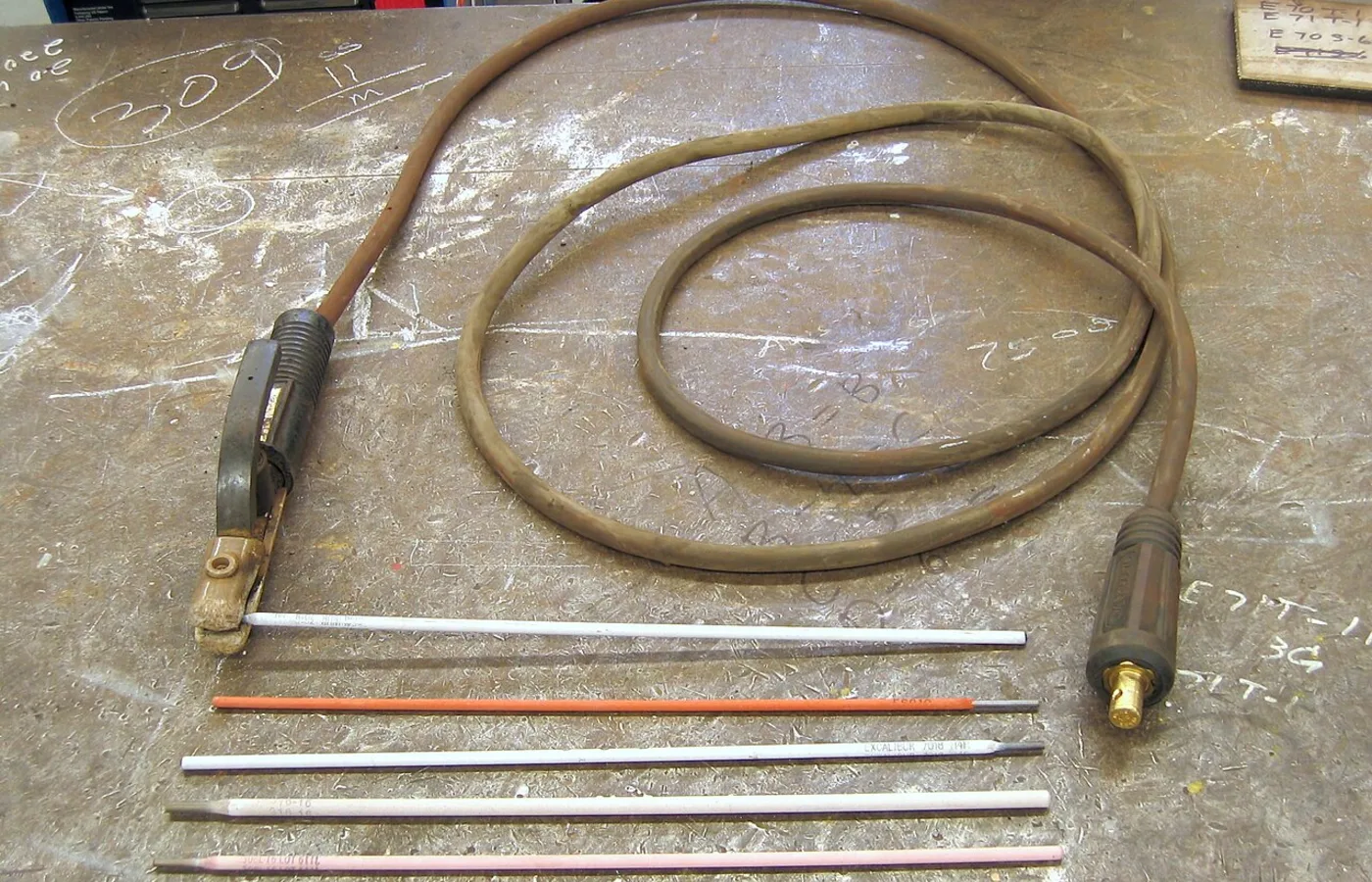
The cover is a general photograph of welding electrodes and a holder, not the three Atlantic products. Photo: Triddle / Wikimedia Commons, public domain; cropped and compressed for the web.
Compare the classification, not just the number 70
| Classification | Specification family | Main distinction |
|---|---|---|
| E7018 | AWS A5.1 | Low-hydrogen carbon-steel covered electrode |
| E7018-1 | AWS A5.1 | Supplementary impact requirements at a lower test temperature |
| E7018-A1 | AWS A5.5 | Molybdenum-alloy weld-metal chemistry |
Lincoln Electric's published E7018 and E7018-1 sheets illustrate the classification distinction: 27 J at -29°C versus 27 J at -46°C. These are classification requirements reported in those sheets, not results for an Atlantic batch. The impact-test temperature is not automatically a permissible service temperature. Use the governing specification edition and project acceptance criteria.
A1 is a chemistry distinction, not another spelling of -1. Lincoln's MOLIBAZ sheet identifies E7018-A1 and reports typical molybdenum of 0.55%. That value belongs to the named product; it cannot be transferred to another manufacturer's consumable.
Atlantic catalogue identities
The reviewed Atlantic catalogue lists CHE508 as AWS A5.1 E7018, CHE58-1 as E7018-1/E7018, and CHH108 as AWS A5.5 E7018-A1. Its CHH108 row reports typical molybdenum of 0.57% and a post-weld heat-treatment test condition. Catalogue typical values are not a batch certificate, and results from different heat-treatment conditions should not be compared as equivalent.
See the individual pages for E7018, E7018-1 and E7018-A1, or the low-hydrogen electrode category.
Before considering a substitute
- Record the complete required and proposed classifications, including hydrogen and moisture designators.
- Identify both base-metal grades and the governing construction specification.
- Check required impact energy and temperature, chemistry and mechanical properties.
- Distinguish as-welded results from post-weld heat-treated results.
- Match the exact product datasheet and required certificates to the supplied batch.
- Have the responsible technical authority determine whether the approved WPS/PQR covers the change and document approval before use.
A product declared only as E7018 does not demonstrate the additional -1 requirement. An E7018-1 proposal for an E7018 job still requires all other project conditions to be checked. Moving to or from A1 changes the chemistry question and is not a simple trade-name change.
Keep H4 and R separate
Hydrogen and moisture designators describe separate requirements. Do not infer H4R from -1 or A1, and do not add a designation to an Atlantic product because another brand has it. The official example sheets below list these designators separately. Correct handling remains necessary; follow the exact manufacturer's instructions and project rules rather than a universal internet oven setting.
Continue with the E7018 storage guide, buying guide or low-alloy selection guide for those separate decisions. Send the full classification and project requirements through Eilia's enquiry channel; availability, price and document provision require confirmation.
Technical references
- Atlantic catalogue, PDF pages 14 and 17
- Lincoln E7018 datasheet
- Lincoln E7018-1 datasheet
- Lincoln MOLIBAZ E7018-A1 datasheet
This comparison does not authorize substitution or replace the governing specification edition, approved procedure or responsible engineer's decision.